Lawn Mowing in Wood Green

Our lawn mowing in Wood Green is built around neat, even grass cutting for homes and managed outdoor spaces that need a regular finish. The service focuses on straightforward, practical care: cutting grass to a sensible height, trimming edges where needed, and leaving the lawn looking tidy rather than overworked. For many gardens, that means a reliable routine that keeps growth under control without changing the character of the space. If you need a one-off cut or ongoing visits, we can keep the work clear and simple.
Grass care is rarely just a matter of passing a mower over the surface. Edges, borders, access, cuttings and the condition of the grass all affect the result. We therefore treat mowing as part of a broader outdoor maintenance task, with attention to detail around paths, corners and awkward sections. Where appropriate, we can combine mowing with other supported garden work such as hedge trimming, garden maintenance and garden clearance, helping the outside space feel consistently cared for rather than only partially finished.
For a clear quotation, it helps to share the size of the lawn, how accessible it is, and whether the grass is currently short, patchy or very tall. Simple information is usually enough to understand the scope and plan the work sensibly. If you are comparing regular maintenance with an occasional tidy-up, it is also useful to say which result matters most: a consistently trimmed lawn, a full seasonal reset, or a broader refresh of the whole garden.
Routine grass cutting and neat finishing
Regular mowing is best when the aim is to keep the garden looking presentable without allowing the grass to become coarse or uneven. We can support schedules that suit the shape of the lawn and the pace of growth, with cuts that are kept consistent from visit to visit. The result is generally smoother than a delayed, heavy cut because the lawn is handled before it becomes too long or difficult to manage cleanly.
Good mowing also depends on the edges. A lawn can appear untidy even when the centre has been cut well, so edging around borders, paving and planted areas matters. Where access allows, we aim to make the finished surface feel more balanced by giving attention to the transition between grass and surrounding features. This is especially useful when the garden includes narrow strips, curves or sections that need a more careful pass than a standard open rectangle.
How the mowing visit is approached
Every garden has small details that change the work: slopes, fences, steps, soft ground after rain, shaded sections and mixed grass thickness all affect the result. A sensible mowing visit takes those conditions into account and uses equipment and technique that suit the space. In some cases, the main decision is whether the lawn needs a light trim or a more considered cut that brings it back into a manageable condition without stressing the grass.
Supporting tidy borders and garden upkeep

Lawn mowing often sits best alongside related garden upkeep, because a tidy lawn can look unfinished if the nearby growth is left unchecked. We can therefore work as part of a broader maintenance plan that keeps the green areas, edges and adjacent planting looking more coordinated. This is not about overcomplicating the job; it is about making sure the visible parts of the garden support one another. When grass, hedges and borders are managed together, the whole space usually reads as more orderly.
If your garden has sections that collect clippings, fallen leaves or overgrown material, it can help to combine mowing with a more general tidy. That might include clearing away light debris, reducing straggling growth near the lawn edge or bringing structure back to spaces that have lost their shape. We also support hedge trimming where this is a relevant part of the garden routine, which can be useful when taller growth starts to cast shade or encroach on the mowing area.
- Grass cutting for regular or occasional upkeep
- Edge tidying around paths, beds and borders
- Supporting maintenance for compact or larger gardens
- Help with related work such as hedge trimming and garden clearance
More than a quick trim
A well-handled mowing job is usually more than a single pass with a machine. The practical choices include cut height, finish, clipping handling and the way the lawn is approached if it is uneven or mixed with other surfaces. A good result also depends on understanding what should be left untouched, particularly where delicate planting, recently seeded areas or decorative features sit close to the grass. Careful work matters because it protects the look of the garden as well as the lawn itself.
Some customers want the lawn simply kept presentable, while others need a more detailed cut after a period of neglect or weather interruption. In both cases, the aim is to leave the area looking ordered and usable. If the grass has grown unevenly, a gradual approach can be more suitable than forcing everything down in one pass. That approach is especially helpful when the lawn is part of a wider outdoor layout with patios, beds or narrow access points.
Useful details for a quote include the approximate lawn size, whether there are front and back areas, and whether the grass is cut regularly or has been left for some time. You do not need to prepare a long explanation; a few facts are enough to indicate the likely workload. If you would like the lawn included in a broader maintenance routine, mention the other outdoor tasks at the same time so the service can be planned as a single visit where appropriate.
Garden maintenance that keeps lawns under control
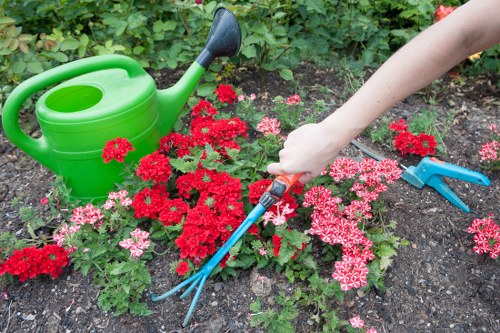
Our garden maintenance support is useful when mowing is part of a repeating pattern rather than a one-off task. Keeping grass under control is easier when it is considered together with the rest of the garden, especially in spaces where growth changes quickly through the season. Rather than waiting until the lawn looks tired or untidy, routine upkeep helps preserve a cleaner appearance and prevents small issues from building into a larger job later on.
Maintenance work can be adapted to the way the garden is actually used. For example, a decorative front lawn may need a sharper finish, while a back garden might benefit more from durable, regular cutting that keeps the surface easy to use. We can also work alongside hedge trimming, landscaping and deck care where those services are relevant to the wider outdoor layout. Keeping those elements in step often gives a better overall result than handling each part in isolation.
If you are deciding between a simple cut and fuller maintenance, think about the state of the edges, the length of the grass and whether other areas are beginning to pull the eye away from the lawn. A garden can look unfinished if one section is neat and the rest is neglected, so it is often sensible to address the connected spaces together. That can save time later and produce a finish that feels more balanced across the whole property.
What affects the scope of a mowing job
The main factors are straightforward. Lawn size is the obvious one, but access, obstacles and the condition of the grass can matter just as much. A simple open lawn is quicker to manage than a garden with many narrow corners, uneven borders or multiple levels. If the grass is long, damp or mixed with heavier growth, the work may take a different approach from a routine tidy. These practical details are what shape a sensible quotation.
It is also worth thinking about whether the lawn needs only cutting or whether some surrounding work is sensible at the same time. If there are overhanging branches, dense hedging, or garden areas that have gathered waste, mowing may be more effective when paired with related tasks. We can cover supporting services where appropriate, including tree lopping and removal, garden clearance and landscaping, though the best combination depends on what is actually present in the garden.
When asking for a quotation, keep the message focused on the area to be cut and the outcome you want. If the lawn is regularly maintained, say so. If it needs recovering after a pause, say that instead. Clear, honest details make it easier to match the work to the right level of effort, which is usually better for both planning and result.
About Wood Green
Wood Green is an area in North London within the London Borough of Haringey, shaped by a long history of suburban growth and later urban development. Its name is strongly associated with the busy district centre around Wood Green High Road, a route that has long acted as a retail and movement spine for the area. The locality sits close to other well-known parts of north London, including Harringay, Hornsey and Bounds Green, and its character combines older residential streets with denser commercial stretches. Public transport has helped define the area’s identity, particularly through Wood Green Underground station on the Piccadilly line, which links the district directly to central London and beyond. The station and surrounding streets support a lively high-street environment that contrasts with quieter residential pockets nearby. Wood Green also includes access to several parks and open spaces, with Alexandra Park and the wider Alexandra Palace area among the best-known landmarks connected to the neighbourhood. The Palace itself, first opened in the nineteenth century, remains a major cultural and architectural feature of the wider district, while the surrounding parkland provides a notable green edge to the urban fabric. Housing in Wood Green ranges from Victorian and Edwardian terraces to later developments, reflecting the area’s gradual intensification over time. Its mix of shopping streets, civic buildings, residential roads and open spaces gives the place a layered identity that is both practical and distinctly London.
Landscape and larger outdoor projects

Although mowing is the main service here, it often sits within a broader outdoor project. Some gardens need the lawn brought into line first, then the rest of the space organised so the finish feels coherent. Where there are tired borders, awkward slopes or areas that no longer work well as they are, landscaping can help reshape the garden in a more usable way. That might mean improving layout, defining edges more clearly or simplifying the way different parts meet.
Landscape gardening is useful when the aim is not just maintenance but a more deliberate improvement of the outdoor space. We can discuss tasks that support the lawn visually and practically, such as reworking the surrounding ground, refining planted sections or helping the garden read as a single planned area rather than disconnected patches. In the right setting, those changes make mowing easier to maintain later, but the main purpose is still a cleaner and more workable garden design.
If your priority is the lawn itself, do not overstate the rest of the work. A straightforward request can be enough: explain which area needs attention, how the space is accessed and whether you want the mowing handled as a standalone job or as part of wider garden improvements. That keeps the conversation practical and helps us respond with the most suitable scope.
Clippings, clearance and finishing touches

After mowing, the final appearance often depends on how the clippings and surrounding debris are dealt with. Leaving cut grass in the wrong places can spoil an otherwise tidy job, especially around paths, paving or low planting. Where needed, we can assist with garden clearance so the space is left more presentable once the cutting is complete. That is particularly useful when the lawn is part of a garden that has accumulated leaves, trimmed growth or general outdoor clutter.
Some customers prefer a very clean finish after mowing, while others mainly want the grass taken down and the lawn made easy to manage. Both are reasonable, and the right approach depends on how the garden is used. If you want a broader clean-up or a fuller reset, it is best to say so early. For a quotation, the final useful step is simple: send a brief note describing the lawn, the access, and any extra outdoor work you want considered, then ask for a clear quote.
Choosing the right mowing schedule
Different gardens need different rhythms. Some lawns are best handled regularly because growth is steady and a light cut keeps everything balanced. Others only need attention from time to time, perhaps after a period of weather-driven growth or a seasonal pause. The right schedule is usually the one that keeps the lawn in a manageable condition without forcing major catch-up work each time. That approach can be more efficient and can also keep the grass looking healthier.
A sensible schedule also depends on how the rest of the outdoor area is managed. If hedges, borders and planted sections are all left too long, the lawn tends to look less polished even when it has been cut. By arranging mowing alongside other supported tasks when needed, the garden can stay more consistent through the year. For some properties, that means simple periodic mowing; for others, it means combining the cut with trimming, tidying or the occasional larger outdoor task.
If you are ready to move forward, send a short enquiry for your quotation. A concise description of the lawn and the result you want is enough to begin.