N22 gardeners guide to small courtyard garden makeovers
Small courtyard gardens can be awkward, beautiful, and full of potential all at once. In N22, where outdoor spaces are often compact, overlooked, or split between shade and reflected heat from brick walls, a smart makeover can turn a tired little yard into a space you actually want to use. That might mean a calmer place for morning coffee, a more private corner for entertaining, or simply a garden that feels less like a dead end and more like an extra room.
This N22 gardeners guide to small courtyard garden makeovers is written for real-world spaces, not glossy magazine plots with endless room to manoeuvre. You'll find practical advice on layout, materials, planting, privacy, maintenance, and the little decisions that make the biggest difference. If you're planning to hire help, it also explains what to ask for, how to compare options, and how to avoid expensive false starts. Truth be told, small gardens punish guesswork.
Whether your courtyard is paved, patchy, shaded, or just plain boring, the aim here is simple: help you make it feel bigger, better, and easier to live with.
Why N22 gardeners guide to small courtyard garden makeovers Matters
A small courtyard is not a "mini version" of a bigger garden. It behaves differently. Space is tighter, drainage matters more, and every surface is doing some kind of visual job whether you planned it or not. In N22, many courtyard gardens sit behind terraced homes, side returns, and flats where privacy, light, and access are all part of the puzzle.
That is why a proper makeover matters. You are not just planting a few shrubs and hoping for the best. You are shaping how the space feels underfoot, how much maintenance it needs, and how it works in daily life. A well-designed courtyard can make a home feel more complete. A poorly planned one can become a slippery, gloomy, high-maintenance patch you avoid.
There's also a local practical side. Weather exposure, narrow access, and awkward construction corners are common in inner London gardens. One morning you've got damp shade, by afternoon a wall may be throwing heat back at the plants, and by winter the whole thing can feel a bit apologetic. A good makeover takes those conditions seriously instead of fighting them.
If you are planning wider outdoor work, it can help to look at the broader gardening services overview first, because courtyard design usually sits alongside maintenance, planting, clearing, and seasonal care rather than replacing them.
How N22 gardeners guide to small courtyard garden makeovers Works
A successful courtyard makeover normally follows a simple but disciplined sequence. First comes a clear look at the space as it is now. Then comes a plan for use. Only after that should the materials and planting be chosen. It sounds obvious, but plenty of people start with plant shopping and end up doing design backwards. Not ideal. Not even close.
The process usually starts by identifying the garden's strengths and weaknesses:
- Where does the light fall during the day?
- Which areas are damp, windy, or overly dry?
- What do you want the space to do: relax, entertain, screen, play, or simply look good?
- How much maintenance are you genuinely happy to keep up?
Once that is clear, the next step is layout. In a small courtyard, layout matters more than size. A single raised bed, a change in paving direction, or a narrow bench tucked into the right corner can change how the whole space reads. The eye needs somewhere to travel. If everything is hard-edged and flat, the courtyard often feels even smaller.
Then comes surface treatment. Some courtyards benefit from refreshing paving, others from adding planting pockets, gravel sections, decking, or permeable materials. The point is not to cram in every trend. The point is to build a space that drains properly, feels balanced, and is easy to live with in real weather. London weather, at that.
Planting is the final layer, but it should never be an afterthought. Shade-tolerant evergreens, climbers, and structural pots can make a courtyard feel soft and layered without requiring constant replanting. Add seasonal colour where it makes sense, then keep the rest steady and reliable.
Key Benefits and Practical Advantages
The obvious benefit is that your courtyard looks better. But the real gains go deeper than appearance.
- Better use of space: A compact garden can be made to feel more functional with zones for sitting, planting, and movement.
- Improved light and balance: Careful design can brighten a dark courtyard and soften hard boundaries.
- Lower maintenance: Smart planting and materials reduce the weekly slog.
- More privacy: Screening with trellis, climbers, or layered planting can make overlooked spaces feel calmer.
- Higher everyday enjoyment: A courtyard that smells of herbs, has a dry place to sit, and looks tidy is more likely to be used.
- Better property presentation: A polished outdoor space can make the home feel more cared for overall.
One of the quiet wins is psychological. A small courtyard that is well set out can make the whole property feel less cramped. That matters more than people admit. You open the back door and the view feels intentional, and the day starts a bit better. Simple, but powerful.
And if you are trying to decide whether to invest in help, the value is not just in planting. A good local team can save you from wasted materials, unnecessary digging, and those "we'll just see how it goes" moments that often cost more later. If budget planning is on your mind, look at pricing and quotes early so the project fits your expectations from the start.
Who This Is For and When It Makes Sense
This guide is for homeowners, landlords, and flat owners in N22 who have a courtyard, patio, rear yard, or enclosed garden that feels underused. It is also for anyone looking at a cluttered or tired outdoor space and thinking, "I know there's something decent in here, but I can't see it." Been there. Most people have.
A courtyard makeover makes sense when:
- the garden is mostly paved and feels stark;
- the planting is patchy, overgrown, or has failed;
- drainage leaves puddles after rain;
- privacy is poor and the space feels exposed;
- you want a lower-maintenance garden;
- the space has become a storage zone rather than a garden;
- you need the area to work for both seating and greenery.
It also makes sense if you are preparing a property for sale or rent, because small outdoor spaces can influence first impressions more than they should, but there it is. People notice. They always notice.
If you already know you want help rather than a DIY route, it is worth checking what local garden services typically cover and whether the team can handle clearing, planting, maintenance, and finishing touches as one joined-up job. That usually leads to fewer gaps and fewer half-done corners.
Step-by-Step Guidance
A courtyard makeover works best when you keep each step focused. Small spaces reward precision. They do not forgive random choices.
1. Clear the space honestly
Start by removing anything that does not earn its keep. Broken pots, tired furniture, weeds in cracks, redundant plant supports, old trellis, and odd ornaments that have lost their charm all need a decision. If it doesn't serve a purpose or add beauty, out it goes.
During clearing, assess what is worth keeping. Good paving can be cleaned. Healthy climbers can be trained. A quality planter may just need new compost and a better position.
2. Look at the bones of the garden
This means the fixed parts: walls, fences, paving, drains, steps, access points, and any awkward corners. In a courtyard, these bones shape everything else. You may not be able to move them, but you can work with them. A pale wall can bounce light. A dark wall can make deep green planting feel dramatic. A poor drain, on the other hand, will keep annoying you until it is dealt with properly.
3. Decide how the space should feel
Before picking plants, decide on the mood. Do you want calm and modern? Soft and cottage-like? Lush and private? Minimal and easy to maintain? This choice affects paving, pot shapes, colour palette, and the plant structure. The more consistent your idea, the less muddled the final result.
4. Set a layout with a clear focal point
A focal point gives the eye somewhere to land. It might be a small bench, a statement planter, a water bowl, a climber-covered panel, or a feature tree in a pot. Without one, the garden can feel like a scatter of unrelated bits.
5. Choose materials that suit the space
In a small courtyard, texture matters as much as colour. Lighter paving can brighten shade. Gravel can soften hard surfaces, though it must be used carefully if accessibility is a concern. Timber can warm the space, but needs the right level of upkeep. Porcelain, natural stone, and brick each create a different feel. There is no universal winner, despite what some brochures suggest.
6. Build layers of planting
The best small courtyard planting has structure. Start with evergreen form, then add seasonal plants, and finally use climbers or tall pots for height. Think in layers rather than random specimens.
In shaded courtyards, ferns, hellebores, heuchera, ivy, and shade-tolerant grasses often do useful work. In sunnier spots, lavender, salvia, rosemary, compact grasses, and small flowering shrubs can bring movement and scent. Match the plant to the light, not the other way round.
7. Finish with lighting and details
Soft lighting, a simple bench, a water source, and a few good-quality containers can finish the space properly. It doesn't need much. It really doesn't. A single warm light against brick at dusk can make the whole garden feel intentional.
Expert Tips for Better Results
Here's where a lot of courtyard makeovers quietly succeed or fail. The broad idea is easy; the details are what make the space usable.
- Use repetition: Repeating the same pot style, paving tone, or plant family creates calm.
- Go vertical: Walls and fences are valuable real estate. Use climbers, trellis, and wall planters.
- Keep the palette tight: Too many colours in a tiny courtyard can feel busy fast.
- Make maintenance realistic: If you hate deadheading, don't design a garden that depends on it.
- Prioritise drainage: A beautiful space that puddles is, frankly, a nuisance.
- Think year-round: Winter structure matters as much as summer flowers.
A small human observation: some of the best courtyards I've seen had only three or four plant types, but each one was positioned with care. That restraint is often what makes the space feel expensive, even when it isn't.
If recycling old materials matters to you, or you want to reduce waste during the project, it can be worth checking a contractor's recycling and sustainability approach. Soil, paving offcuts, plant waste, and packaging all add up. Best to plan that part rather than deal with a heap at the end.
Common Mistakes to Avoid
Small courtyard gardens are forgiving in some ways and unforgiving in others. The usual mistakes are easy to make and annoying to fix.
- Overcrowding the space: Too many features make a small garden feel cramped.
- Ignoring shade and aspect: A plant that loves sun will sulk in a north-facing corner.
- Using too many finishes: Mixing stone, brick, timber, gravel, and five pot styles can become visually noisy.
- Forgetting storage: Where will cushions, tools, or bins go?
- Choosing high-maintenance plants by accident: Pretty is great, but only if you can keep up.
- Not checking access: Narrow side passages can make delivery and installation trickier than expected.
Another common problem is starting with decorative purchases before sorting the structure. It's a bit like buying cushions before the sofa. Not disastrous, but backwards. And yes, people do it all the time.
Finally, don't ignore safety and access when work is being done. If the project involves lifting, power tools, or repeated site visits, it is sensible to check the contractor's health and safety policy and insurance and safety information. That is just sensible due diligence, not paperwork for paperwork's sake.
Tools, Resources and Recommendations
For a courtyard makeover, the right tools matter because space is limited and mistakes show quickly.
Useful tools
- garden gloves and kneeling pad
- spade, hand trowel, and fork
- pruning shears or secateurs
- stiff brush and patio cleaner
- wheelbarrow or rubble sacks
- level, tape measure, and string line for layout
- watering can or hose attachment suitable for small spaces
Helpful resources
If you are comparing support options, the most useful page is often the one that explains the full range of work rather than a single job title. The services overview can help you understand whether your project needs clearance, regular maintenance, planting refresh, or a more complete redesign approach.
For questions about cost planning and what's included, pricing and quotes is a sensible place to start. It's better to ask early than assume later.
And if you need to know how support is handled after a job is arranged, the site's payment and security information is worth reading. Clear processes make a project feel much less stressful.
Law, Compliance, Standards, or Best Practice
For most small courtyard makeovers, you are not dealing with heavy regulation in the way you might on a major build. Still, there are sensible standards and best practices to keep in mind.
First, if the work involves contractors entering your property, using machinery, lifting materials, or carrying out repeated visits, ask how they manage site safety. A clear health and safety policy and evidence of insurance and safety are both reassuring and practical. It is not about being formal for the sake of it. It is about making sure the job is properly managed.
Second, if waste is being removed, the responsible handling of green waste and old materials matters. Good contractors should be able to explain what gets reused, recycled, or disposed of properly. That is one reason the recycling and sustainability page is useful for anyone who cares about the outcome beyond the finished look.
Third, in shared buildings or rental properties, you may need to check permissions before changing surfaces, drilling into walls, or altering access routes. That's a local property-management issue rather than a universal law, but it can save headaches. In London especially, it pays to ask twice and dig once.
If you are working with a contractor and want a clear path if anything is not right, it is sensible to know how they handle feedback. A visible complaints procedure is a trust signal, plain and simple. Nobody expects perfection. They do expect accountability.
Options, Methods, or Comparison Table
There are a few common ways to approach a small courtyard makeover. The best choice depends on budget, maintenance tolerance, and how much the space needs to change.
| Approach | Best for | Pros | Trade-offs |
|---|---|---|---|
| Refresh only | Tired but functional courtyards | Lower cost, faster turnaround, less disruption | Won't fix deeper layout or drainage issues |
| Partial redesign | Spaces with awkward corners or weak planting | Balanced cost and impact, more flexible | Needs clear planning to avoid a patchwork feel |
| Full makeover | Courtyards that feel unusable or dated | Biggest transformation, better long-term result | Higher cost and more decisions |
| Plant-led makeover | Paved yards needing softness and life | Good visual impact, often quicker than hard landscaping | Depends on existing surfaces being sound |
For many N22 homes, a partial redesign is the sweet spot. Enough change to make the space feel genuinely new, but not so much that the project becomes overwhelming. To be fair, that's usually where the best value lives.
Case Study or Real-World Example
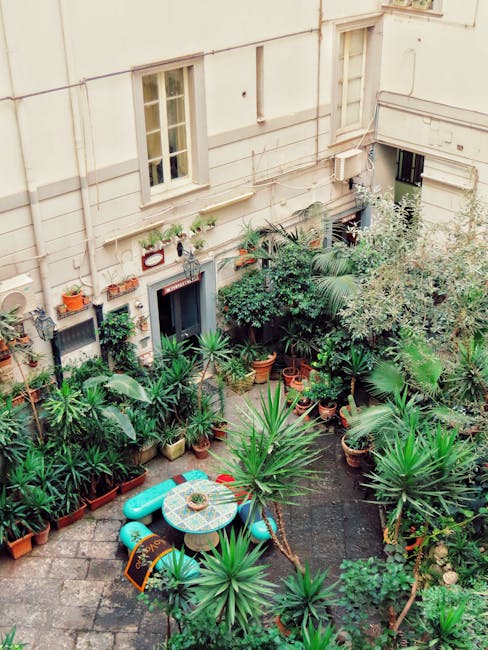
Imagine a small brick-walled courtyard behind a terraced house in N22. The space is mostly paving, with one drain in the corner, a few struggling pots, and a fence that offers little privacy. It gets a bit of morning sun, then settles into shade by mid-afternoon.
The makeover plan is straightforward:
- clear the clutter and weed the joints;
- clean the paving and check drainage;
- add a slim raised bed along one boundary;
- introduce a climbing evergreen for screening;
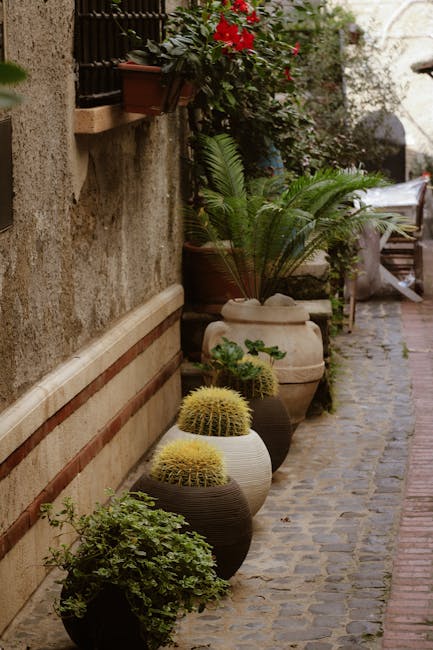
- use three large matching pots to create structure;
- choose shade-tolerant planting with some seasonal interest;
- add a simple bench and warm wall light.
The result is not a dramatic "before and after" fantasy with fountains and marble effects. It is more useful than that. The garden becomes somewhere you can sit with a mug of tea on a cool evening, somewhere that looks neat from inside the house, and somewhere that feels finished. The smell of damp soil after watering, the soft green against old brick, the quiet sense that the space finally makes sense. That is the real win.
In projects like this, the biggest improvement is often not the biggest feature. It is the way the whole space starts to read as one coherent room.
Practical Checklist
Use this as a simple pre-project check before you start, whether you are doing the work yourself or bringing in help.
- Measure the full courtyard accurately.
- Note sun, shade, and wind exposure at different times of day.
- Identify problem areas: puddling, cracks, overgrown corners, poor access.
- Decide what the space must do first: sit, grow, screen, or all three.
- Choose a style direction and keep it consistent.
- Check whether existing paving or walls can be reused.
- Pick plants that suit the light and the level of maintenance you want.
- Plan storage for tools, bins, and cushions.
- Confirm delivery access for materials.
- Check safety, insurance, and payment arrangements before work begins.
- Think about recycling, reuse, and waste removal.
- Leave room in the design for one focal point, not five.
Quick summary: in a small courtyard, the best results come from clear priorities, restrained materials, and planting that can cope with the site. Fancy is optional. Coherent is not.
Conclusion
A small courtyard in N22 does not need to stay awkward or neglected. With the right plan, it can become a calm, practical, and genuinely lovely part of the home. The key is to work with the space you have rather than trying to force it into something it isn't.
Keep the layout simple, choose materials carefully, and let the planting do quiet work instead of trying to shout over the architecture. If you are hiring help, look for clear communication, sensible safety standards, transparent pricing, and a proper approach to waste and aftercare. That combination tends to produce the best outcomes, and it usually feels calmer from day one.
Get a free quote today and see how much you can save.
With a bit of planning, even the tiniest courtyard can become the part of the property that makes you smile when you step outside. And honestly, that's the point.
Frequently Asked Questions
What is included in a small courtyard garden makeover?
It usually includes clearing, cleaning, layout planning, surface improvements, planting, and finishing touches such as pots, screening, or lighting. Some projects also involve drainage checks or minor repairs.
How long does a courtyard makeover usually take?
That depends on the size and scope of the work. A simple refresh may take a day or two, while a fuller redesign can take longer if materials, planting, or preparation are more involved.
Can a very shaded courtyard still look attractive?
Yes, absolutely. Shade can work beautifully if you choose the right plants and materials. Ferns, evergreen structure, and lighter paving or wall finishes often help create a brighter feel.
What are the best plants for a small courtyard in London?
It depends on sun, shade, and how much maintenance you want. In many N22 courtyards, compact evergreens, climbers, and shade-tolerant perennials work well because they bring structure without taking over.
Do I need planning permission for a courtyard makeover?
Most basic garden makeovers do not need planning permission, but this can change if you are altering a shared building, listed property, or structure near boundaries. If in doubt, check before work starts.
How can I make a small courtyard feel bigger?
Use a restrained colour palette, good lighting, vertical planting, and simple repeating materials. A clear path or open central area also helps the space feel less cramped.
Is gravel a good idea for a courtyard garden?
It can be, especially for softer visual texture or drainage, but it is not right for every space. Think about access, maintenance, and whether the surface will be comfortable underfoot.
What should I ask a gardener before booking the work?
Ask what is included, how they handle access and waste, whether they have insurance, what safety practices they follow, and how pricing is structured. Clear answers are a good sign.
How much maintenance does a courtyard garden need?
That depends on the design. A well-planned courtyard can be relatively low maintenance, especially if you use the right plants and avoid overcomplicated features. Some tidying and seasonal care will still be needed, of course.
Can old paving be kept during a makeover?
Yes, if it is structurally sound and suits the final design. Sometimes a deep clean, re-pointing, or a change in planting is enough to transform the feel without replacing everything.
What if my courtyard has poor drainage?
That should be addressed early, because it affects everything else. Drainage problems can sometimes be improved with surface adjustments, new materials, or better fall direction, but the right fix depends on the cause.
How do I choose between a refresh and a full redesign?
If the structure is basically sound, a refresh may be enough. If the space is awkward, patchy, or hard to use, a full redesign may be better value in the long run. A good gardener can help you judge which route fits the space and budget.
What makes a courtyard makeover feel professional?
Consistency. Matching materials, thoughtful planting, sensible scale, and clean edges make a small space look finished. It's usually the quieter decisions that do the heavy lifting.
If you are still deciding on the right approach, take your time, walk the space in the morning and again late afternoon, and trust what the garden is telling you. Small spaces have a voice, even if it's a faint one.